Pre-K
“Children this age have an increasing capacity for language and inquiry and for understanding other points of view; they are learning to plan and monitor their own activities and take on independent projects”
In our Pre-K program, children spend four hours a day at school immersed in active and purposeful learning across different areas including literacy, math, science, art and design, and pretend play. Our Pre-K curriculum is designed to encourage a balance of child initiated and educator facilitated activities. It offers children a variety of choices within a carefully prepared indoor and outdoor environment.
Day in the Life
Pre-K Learning Spaces
Sensory Gym
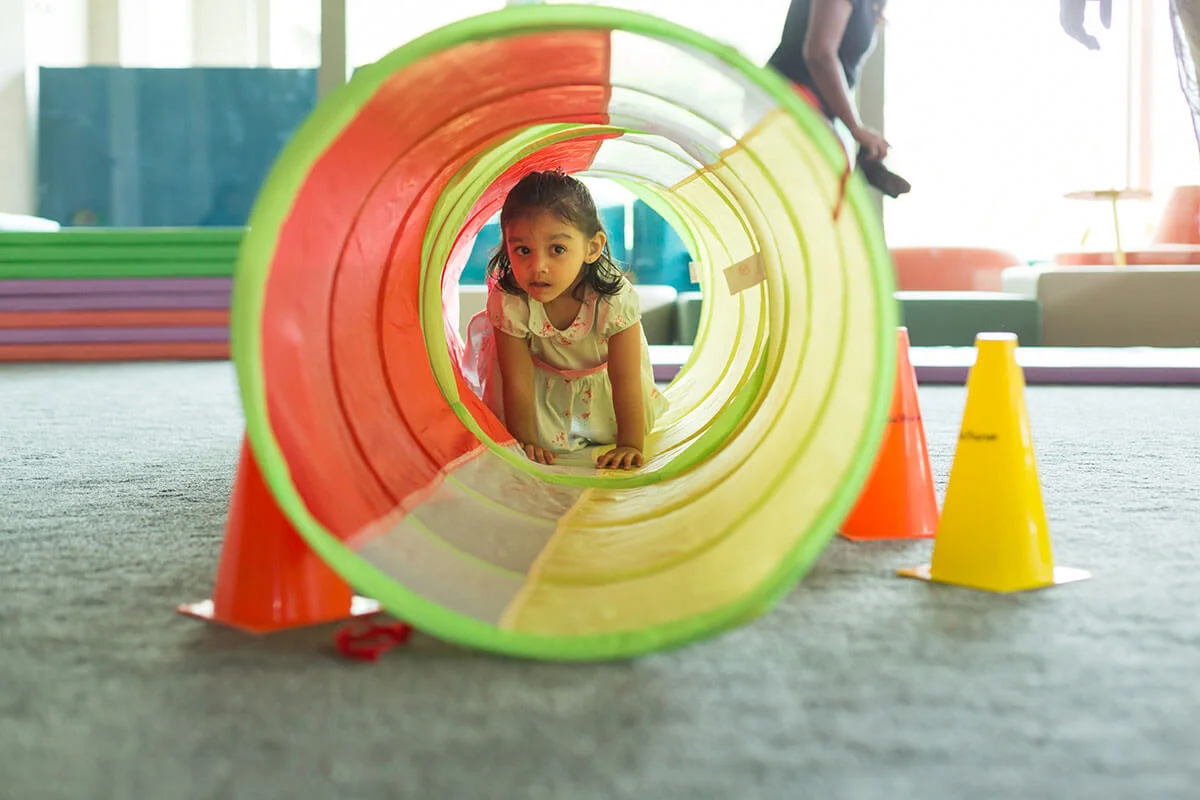
The sensory gymnasium is every child’s favourite space at Toddler’s Den. It is filled with open-ended and structured challenges that change every week. Children strengthen physical skills and social skills as they walk on balancing beams, wobble on river stone gonges, fall on crash mats, climb on rock walls, jump under parachutes, ride scooters, swing on ziplines, and hang on wallbarz.
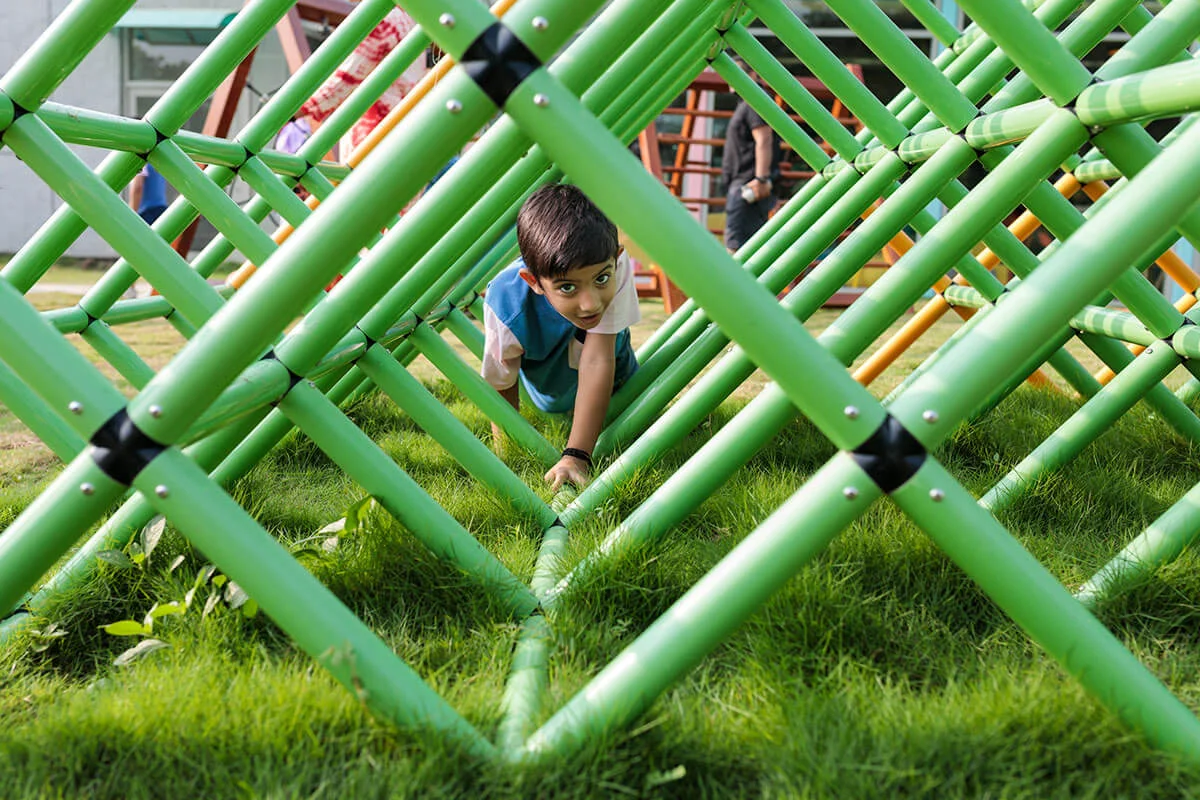
Outdoor Play Spaces
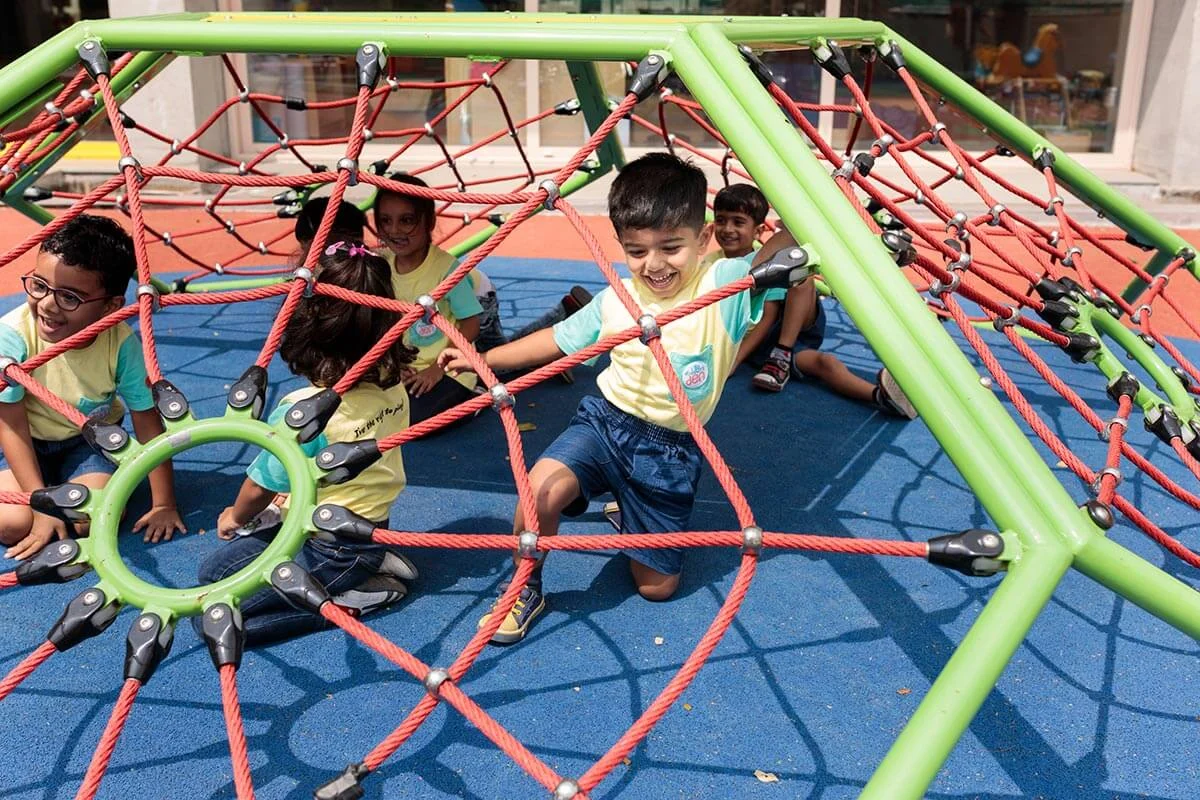
Toddler’s Den is equipped with 3 types of outdoor spaces - active, social, and experimental. In the active play area, children have access to open-ended play equipment where they develop their gross-motor skills through playing football, cycling, crawling and climbing on mounds. The outdoor social area is an interactive and collaborative space with a sand pit, water tub and a pretend play area. In the experimental outdoor area, children experiment with materials that evoke their multiple senses.
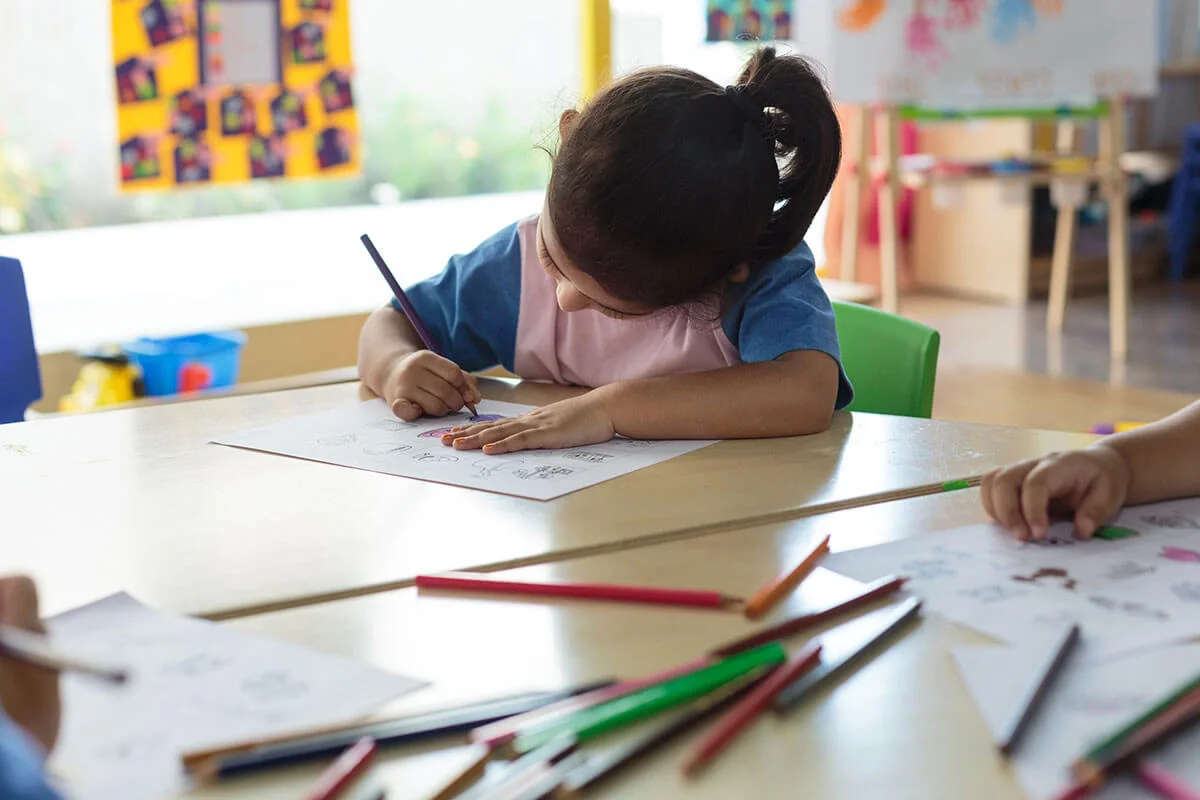
Numeracy and literacy station
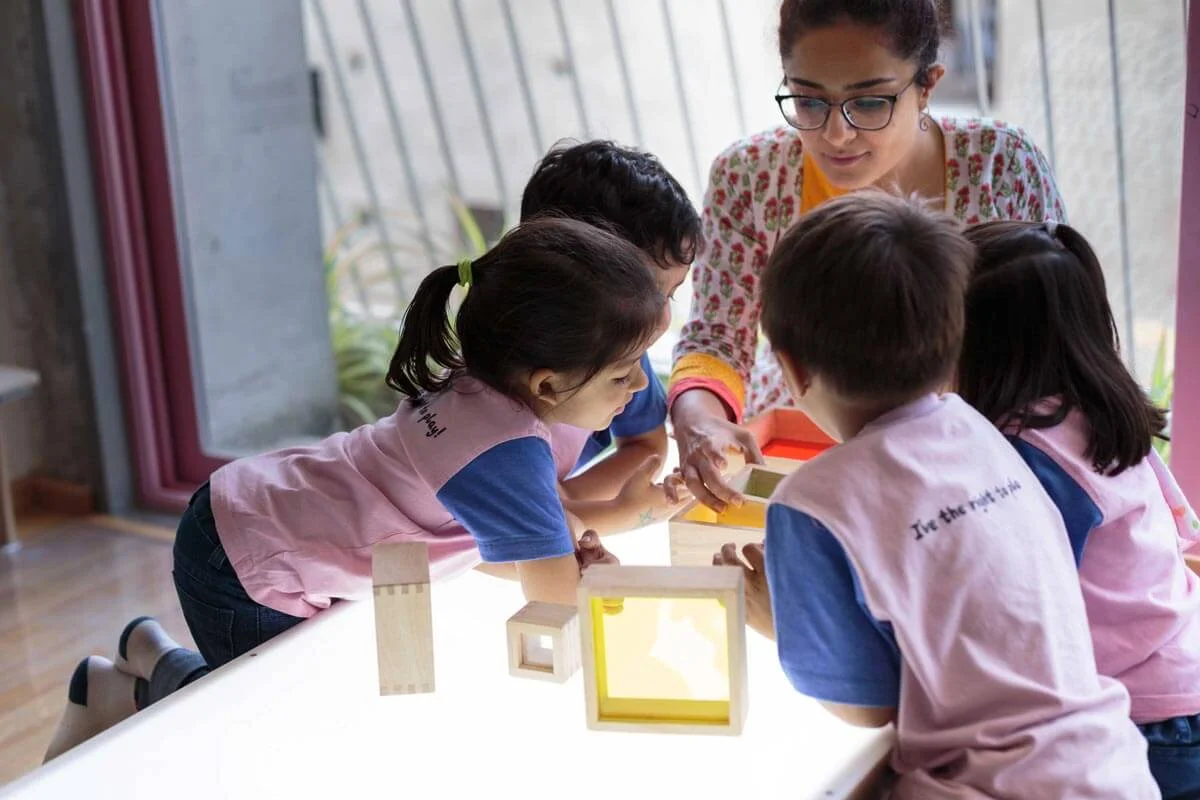
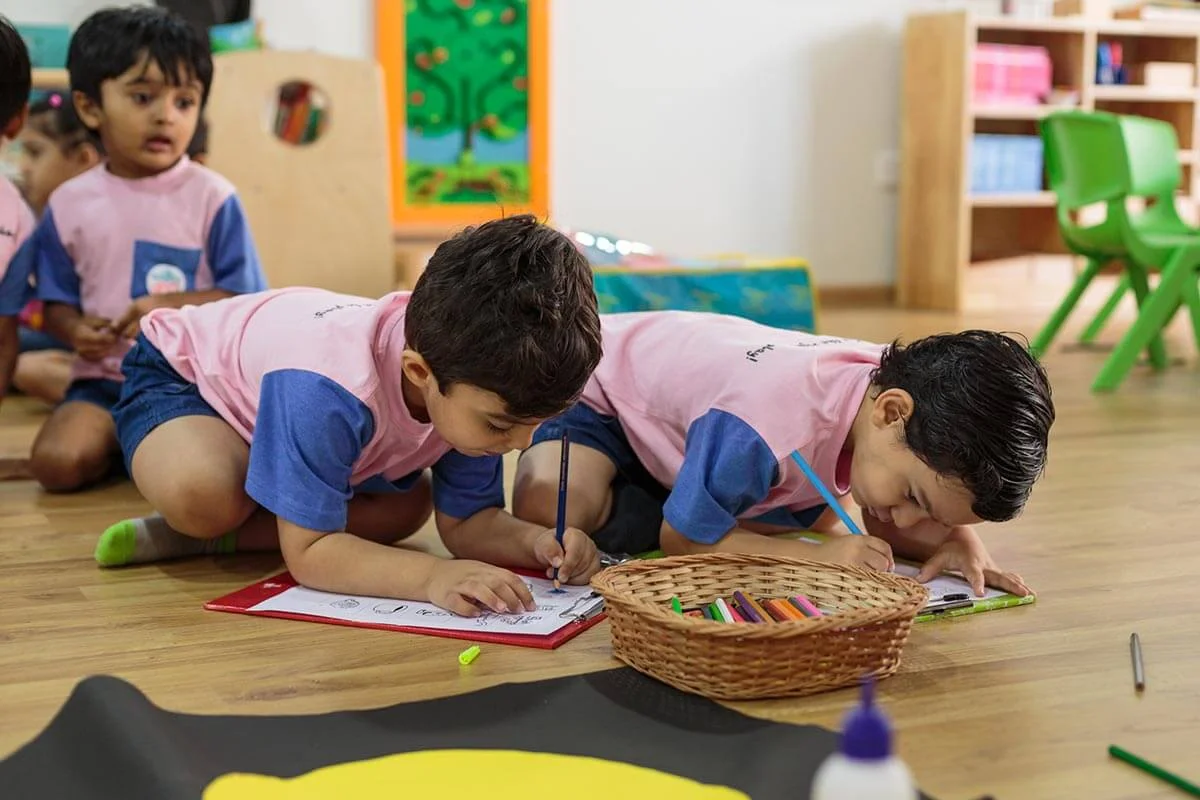
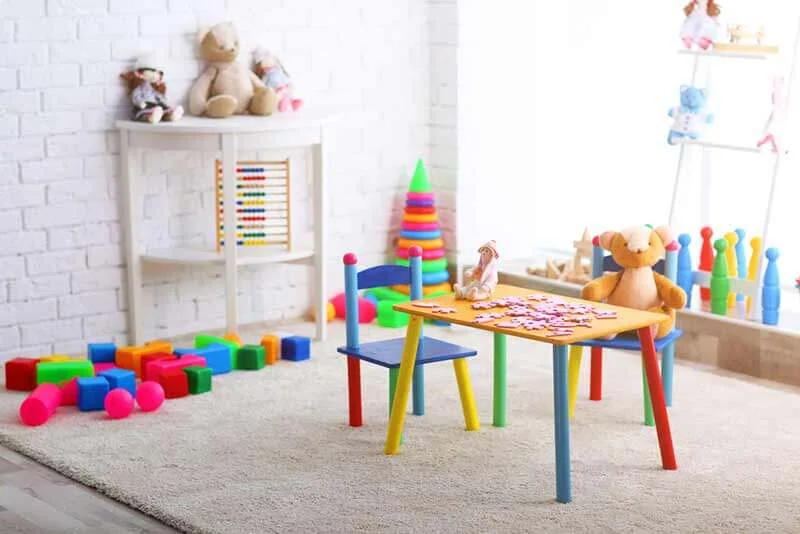
In literacy, children start with a phonics program that promotes their oral and reading skills as well as build their writing skills through several art and pre-writing explorations. In math, children learn counting, measurement, patterns, geometry, and data handling. The areas are well equipped with light tables, mirror tables, montessori materials and children learn by playing, making, drawing, recording, and solving.
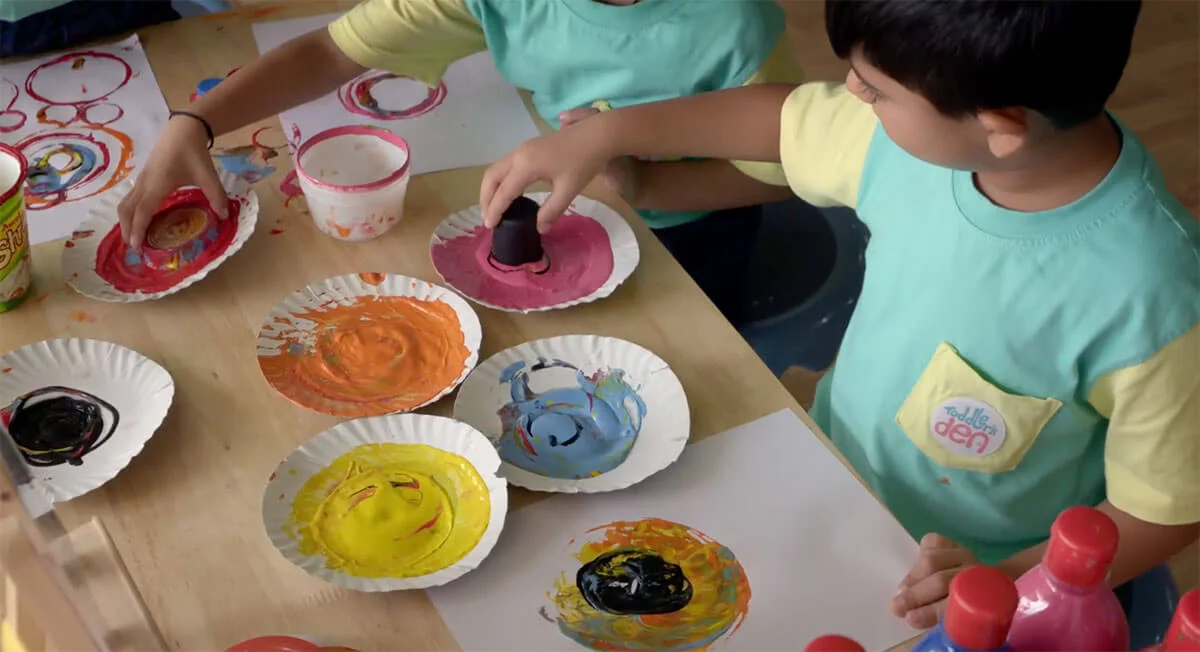
Art and Design Station
The Art and Design Station has easels, tables and mirror tables for engaging in various kinds of visual art activities such as sketching, painting, creating illustrations, cartoon-making, and texture-making. Children are not limited to traditional tools and techniques but instead have access to a range of natural and synthetic art tools such as rollers, stamps, sponges, steel scales, leaves, stems, and many varieties of paper.
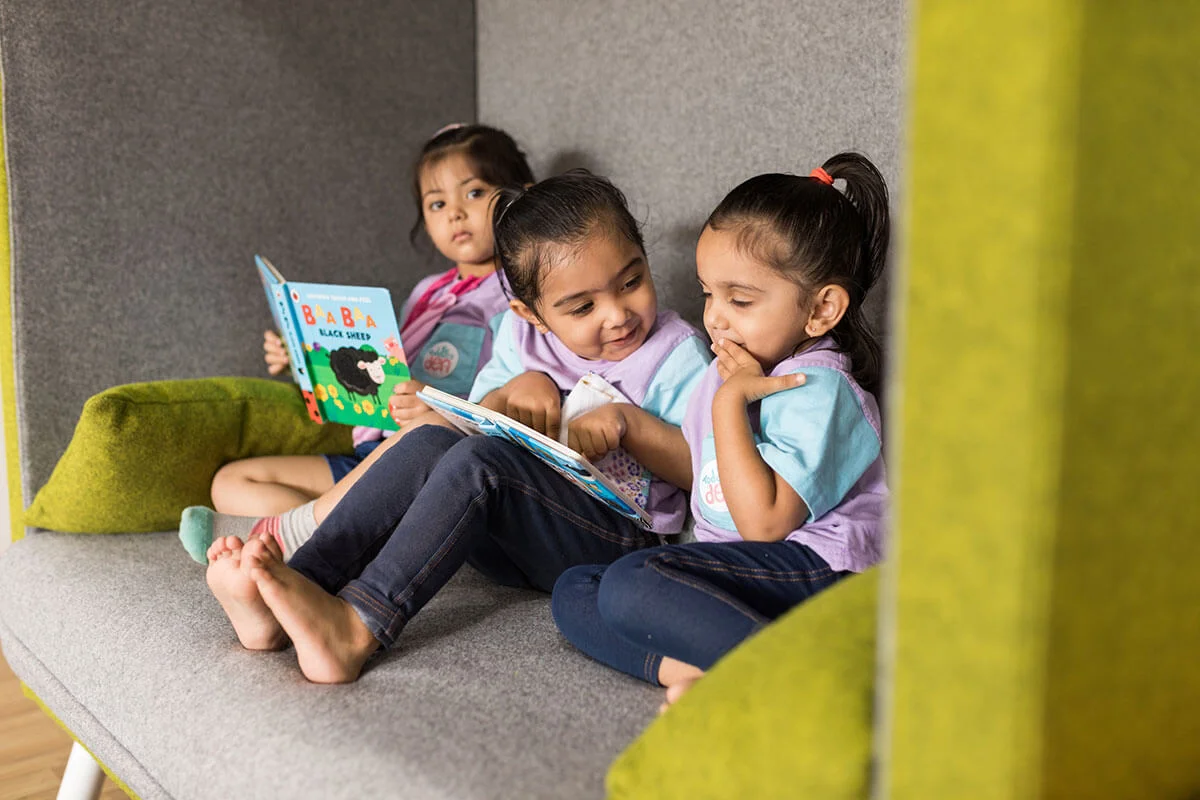
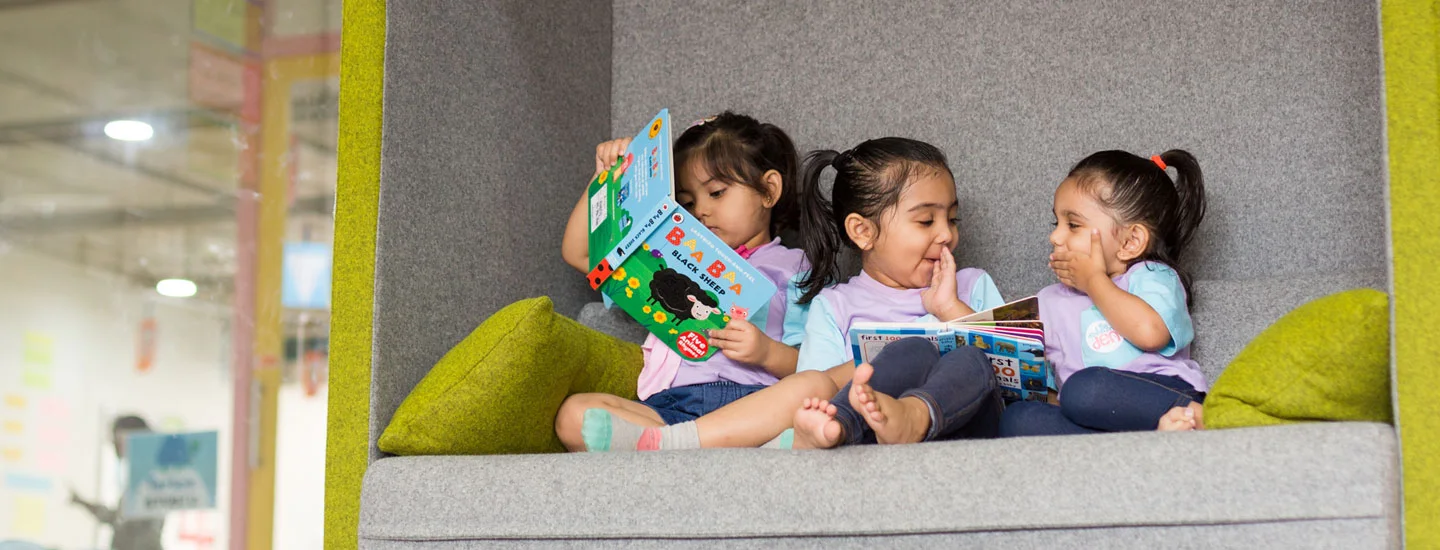
Reading Station
The reading station is a cozy nook filled with pillows, plush characters, and couches. Storybooks of all genres including science, numeracy, social world, imagination, and emotional intelligence are hosted in this center. Children engage in reading individually or in pairs, listening to read-alouds and performing plays with peers. The reading station also acts as a reef of calm where children can escape the hustle and bustle of the classroom.
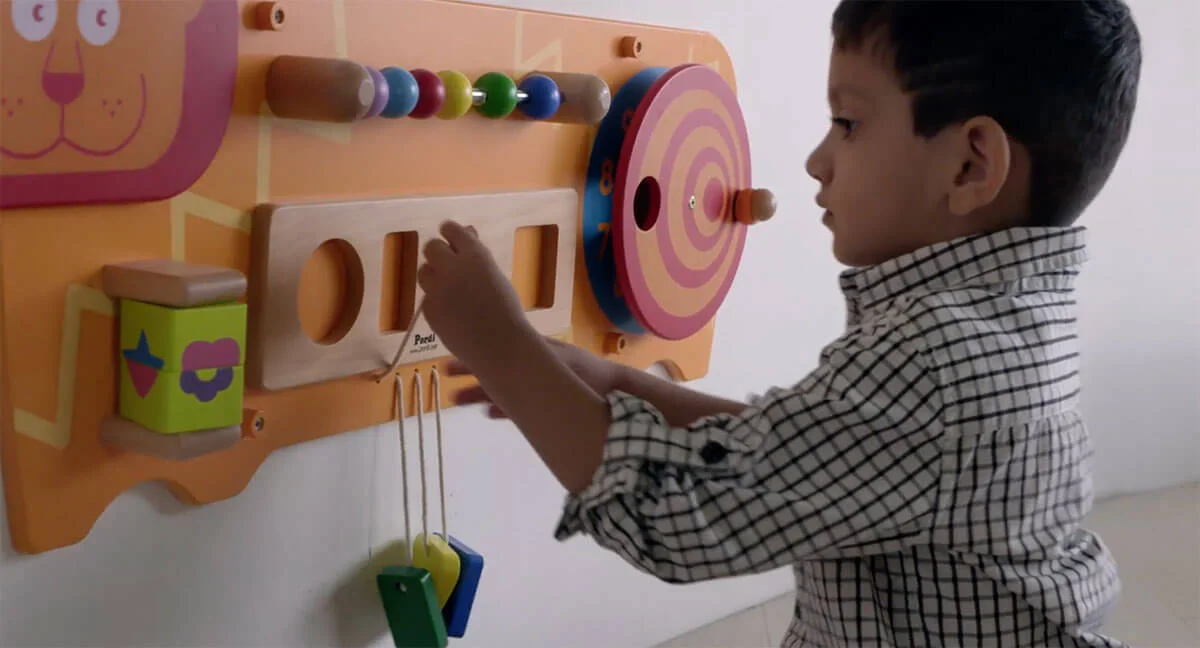
Sensory Station
Children this age start utilizing their senses to examine, discover, categorize, and interpret the materials presented to them. From observers they turn into scientists, creating hypothesis about each material, its properties, and its purpose. This station hosts a water and sand table, a sensory table with different touch and feel materials, and a sensory wall. Children use these materials to test several theories by experimenting with them.
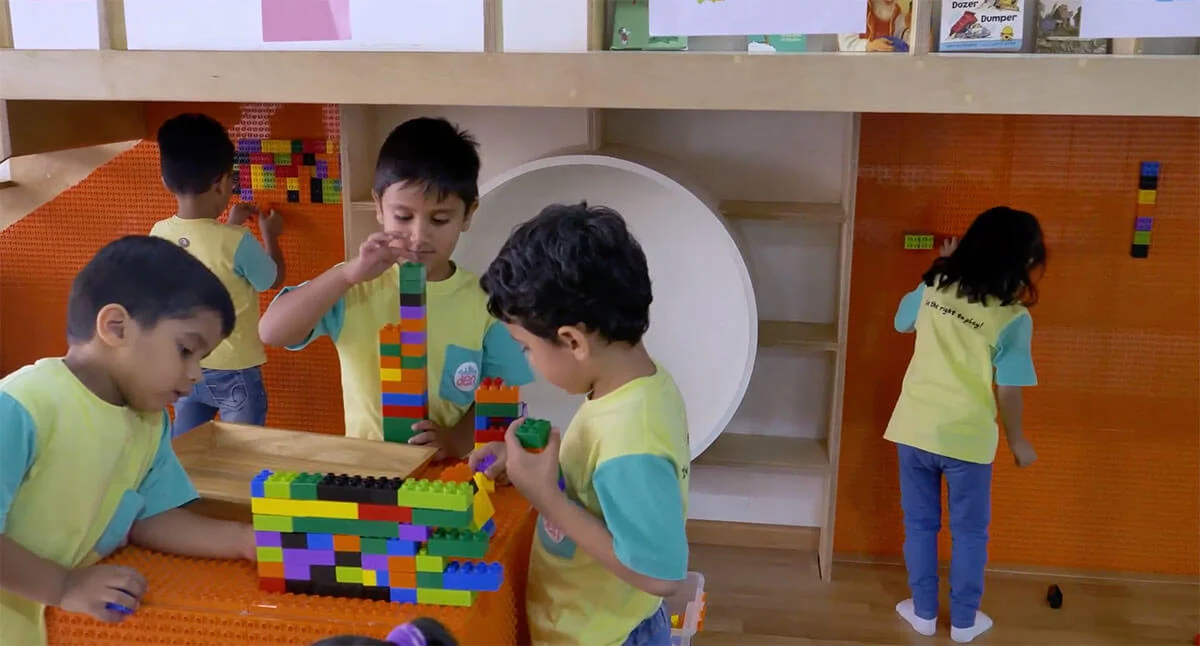
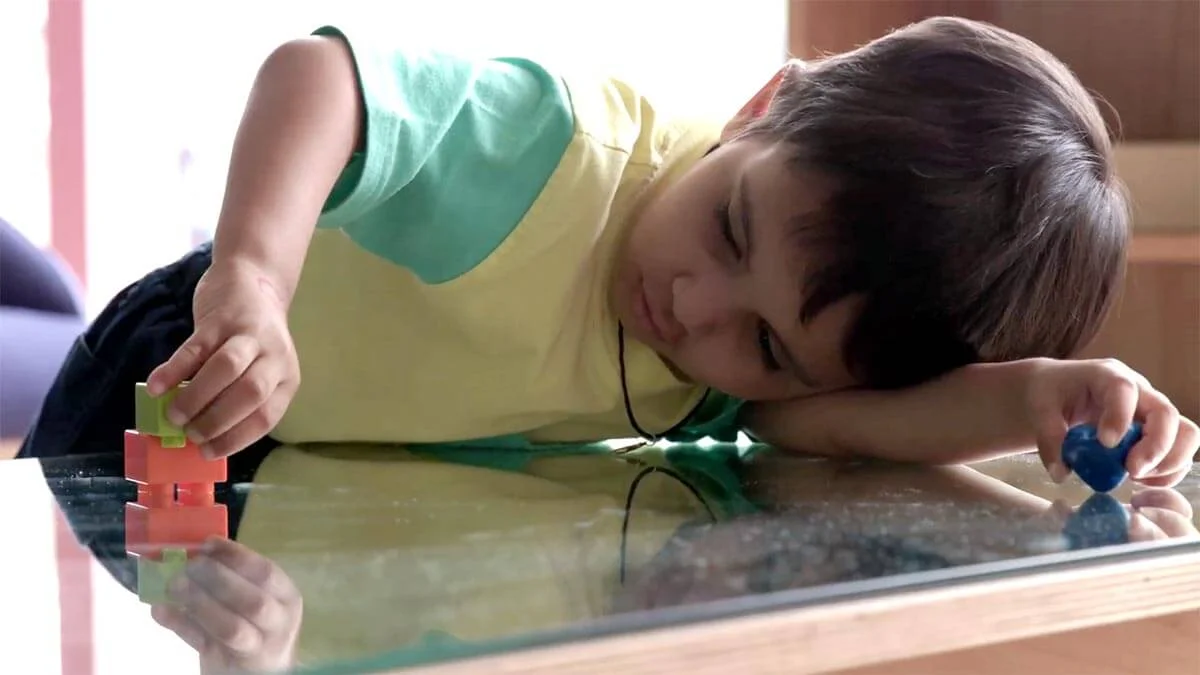
Block Station
Our block station is equipped with sturdy and child-friendly blocks of different sizes, shapes, and characteristics such as magnetic blocks, lego blocks, spiral blocks, foam materials, wooden unit blocks, linkers, and miniature models. Using all of these materials, children imagine, tinker, and recreate their thoughts and interpretations of the world here.
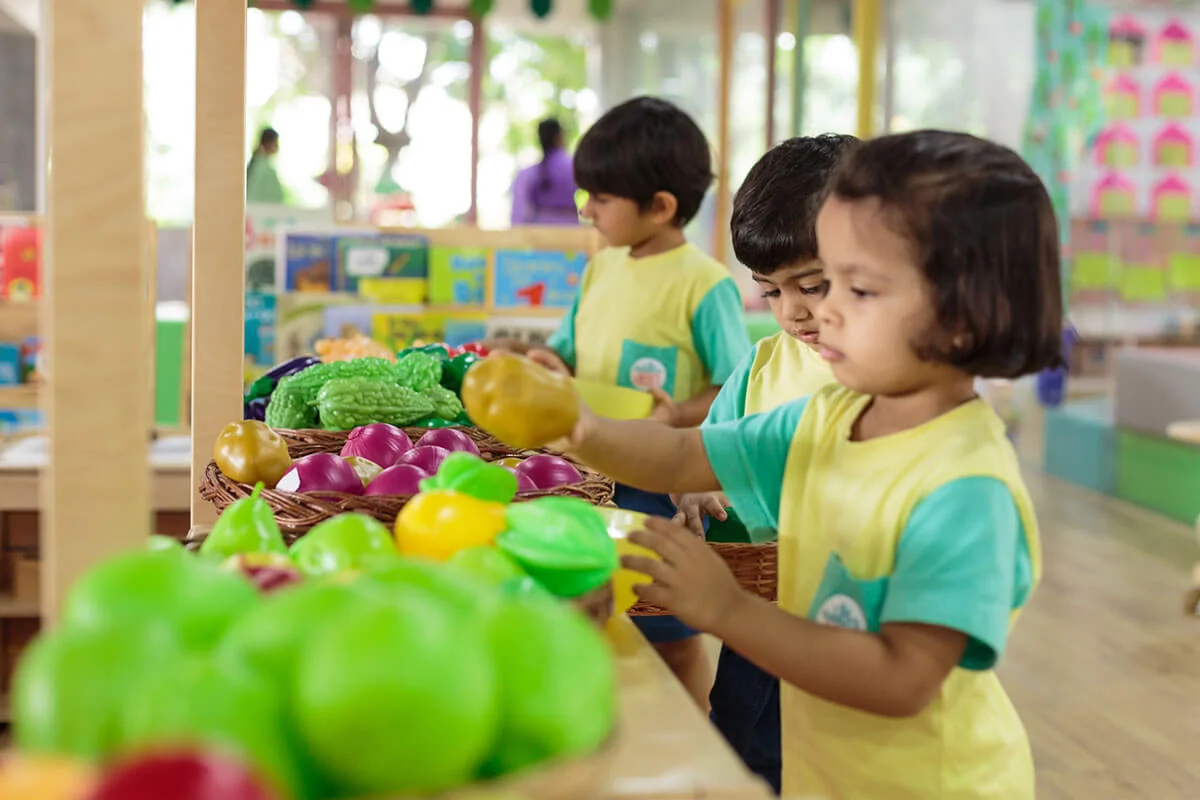
Pretend Play Station
The pretend play station is complete with a kitchen, a dining table, a hospital, mirrors, costumes, and props. Children spin their own tales or recreate experiences they’ve seen or read. Dramatic play helps children make sense of their world by translating their abstract thoughts into concrete actions. Children build their social interaction skills and learn to use various tools by spending time in this area.
Frequently asked questions
At Toddler's Den, the IB Primary Years Programme begins in Pre-Kindergarten and continues through Kindergarten.In the Early Years, the PYP comes alive through questions, stories, materials, conversations and investigations. Children explore concepts, ask questions, make connections and develop an understanding of the world around them. This forms the foundation for inquiry-led learning and helps children grow as curious, confident and lifelong learners.
A typical Pre-K day brings together whole-group, small-group and independent learning experiences.
The day begins with a morning meeting, helping children connect, settle and prepare for the day ahead. Children then engage in music and movement, storytelling, expert-led sessions and focused learning blocks for language, mathematical concepts and the Unit of Inquiry. These learning blocks are play-based and hands-on, with children exploring through learning centres, building, guided play and open-ended experiences. Outdoor exploration and regular gym sessions add opportunities for movement and active discovery. The day closes with reflection, where children revisit their experiences, share their thinking and make meaning of their learning.
Yes. Literacy and numeracy are an important part of the Pre-K programme, and they are introduced in meaningful, age-appropriate ways. For literacy, children follow the Jolly Phonics approach while also building language through songs, rhymes, stories, conversations and mark-making. For mathematics, children explore concepts through hands-on learning, play and problem-solving. Regular Math Talks give children opportunities to share ideas, explain their thinking and build confidence in mathematical reasoning, with a focus on developing understanding rather than rote learning.
Pre-K builds the foundations children need to thrive in Kindergarten.
Children develop early literacy and mathematical understanding, while also building communication, self-management, problem-solving and collaboration skills. They become more comfortable with routines, making choices, working independently, expressing their ideas and engaging in longer periods of focused learning.
Through the Unit of Inquiry, children begin asking questions, making connections and reflecting on their learning. These foundations prepare them to engage confidently with the more complex inquiry-based experiences of Kindergarten.
The academic year begins in June 2027, with enrolments opening in September 2026.
Families can begin their admissions journey by attending one of our Admissions Events and meeting our Admissions Team. The team will walk you through the programme, admissions process, available spaces and next steps.